Debt Collector Text Rules Florida Consumers Need to Know in 2026
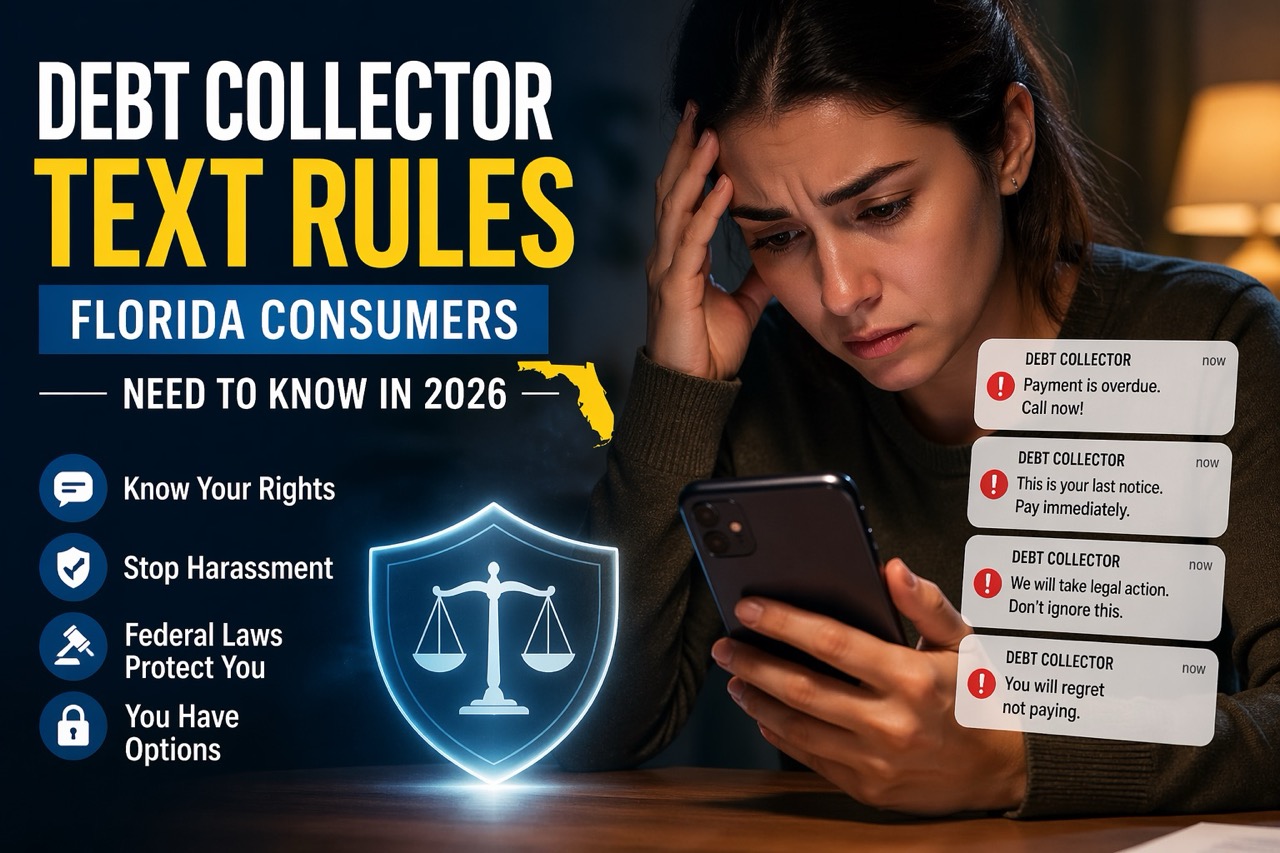
Your phone buzzes. It is a text from a debt collector. It feels intrusive. You were not expecting it. Many people do not know if this is even legal. The truth is that debt collection laws have expanded to cover digital communication.
Collectors can use texts, emails, and direct messages today. But that does not mean they can send anything, anytime, to anyone. There are strict debt collector text rules they must follow. Crossing those lines may be a violation of federal law. In this blog we will get to know exactly what collectors are allowed to do, where the line is, and how to protect yourself.
Can Debt Collectors Legally Text You?
Yes. Debt collectors can legally send you text messages in 2026. But they cannot text you freely or without limits. Texting is treated as a regulated communication channel under federal law.
Collectors must follow specific debt collector text rules when reaching out digitally. They must clearly identify who they are in every message. They also need a valid basis to contact you at that number. Consent plays a major role in whether a text is lawful. If a collector texts you without following these rules, that message may already be a violation. Knowing your rights helps you recognize when the law is being broken.
What the Law Says About Text Messages in Debt Collection
The Fair Debt Collection Practices Act is the primary law governing debt collector behavior. Updated FDCPA regulations now explicitly address digital communication including text messages. Collectors must clearly identify themselves in every text they send. They cannot send messages at unreasonable hours. Generally that means no contact before 8 a.m. or after 9 p.m. in your local time zone.
FDCPA text message rules also limit how frequently collectors can reach out. Excessive messaging can cross into harassment territory under the law. Debt collection laws in 2026 make clear that digital contact carries the same legal weight as a phone call.
When a Debt Collector’s Text Becomes Harassment
There is a clear difference between a legal text and digital debt collection harassment. Not every text from a collector is a violation. But some behavior goes far beyond what the law permits. If you have been receiving texts that feel aggressive, threatening, or relentless, you are right to question them. Here is what to look for:
Red Flags to Watch For
- Repeated or excessive messages sent within a short period of time
- Messages sent early in the morning or late at night outside allowed hours
- Threatening, misleading, or abusive language in any message
- Messages that do not clearly identify the collector or the debt
Why These Actions May Violate the Law
The FDCPA prohibits collectors from engaging in harassing, abusive, or deceptive conduct. This protection extends fully to digital communication. If a collector sends threatening texts or floods your phone with messages, they may be violating your rights under federal law. Consumers who experience this kind of abuse may be entitled to take legal action against the collector.
Do You Have to Give Permission for Text Messages?
Consent is a critical factor in whether a collector can legally text you. There are two types of consent under the law. Express consent means you directly gave permission to be contacted by text. Implied consent may arise from the circumstances of your relationship with the original creditor.
Collectors sometimes claim they obtained your number lawfully through account records. That does not always mean they have the right to text you. You have the right to withdraw consent at any time. Once you clearly communicate that you no longer consent to text contact, the collector must respect that. Continuing to text you after withdrawal may be a FDCPA text message rules violation.
How to Stop Debt Collector Texts Immediately
You do not have to keep receiving unwanted texts from a debt collector. Federal law gives you the right to stop certain communications. The key is acting clearly and creating a record of your request. Here is how to take control of the situation:
Simple Steps You Can Take
- Reply directly to the text with a clear written opt-out request
- Send a formal cease communication letter by certified mail with return receipt
- Block the number after sending your written notice if messages continue
Why Written Requests Matter
A written request does more than just ask them to stop. It creates a documented record of exactly when you made the request and how it was delivered. If the collector continues texting you after receiving your notice, that record becomes powerful evidence and significantly strengthens your legal position.
What to Do If Texts Continue After You Opt Out
If texts keep coming after you have asked them to stop, you need to start building your case. Continued contact after a valid opt-out request is a serious potential violation of federal law. Do not delete anything. Every message matters at this point. Take these steps immediately:
- Save every text message and do not delete any communication from the collector
- Take dated screenshots of all messages received after your opt-out request
- Track the exact dates, times, and frequency of every message you receive
- Begin preparing for a formal complaint to the Consumer Financial Protection Bureau or for direct legal action
Your Rights Under Federal Debt Collection Laws
Federal law gives you meaningful protections against abusive debt collection behavior. You have the right to be free from harassment, abuse, and repeated unwanted contact. Collectors must communicate with you in a truthful and transparent way at all times.
You also have the right to dispute any debt they claim you owe. You can demand written verification before engaging further. In addition, you have the right to stop certain types of communication entirely. Once you exercise that right in writing, collectors are legally bound to honor it.
How a Consumer Protection Lawyer Can Help
A consumer protection lawyer can step in when a collector is not playing by the rules. They will review your full communication history and assess whether any messages violated FDCPA text message rules. Identifying violations requires knowing exactly what the law requires and where the collector fell short.
Once violations are identified, a lawyer handles all further communication with the collector directly. You do not have to engage with them on your own. If your rights were violated, you may be entitled to compensation. At Consumer Law Organization, P.A., many cases involve no upfront fees. Federal law may require the collector to cover attorney costs if your claim succeeds.
Quick Checklist: Are These Texts Legal or Harassment?
Use this checklist to evaluate the messages you are receiving:
- Is the sender clearly identified in every message?
- Are messages arriving frequently, aggressively, or back to back?
- Did you already send a written request to stop contact?
- Are they texting before 8 a.m. or after 9 p.m. in your time zone?
If you answered yes to any of these, the collector may be violating your rights under federal debt collection laws in 2026.
Speak With a Consumer Protection Attorney Today
You have rights. A debt collector sending illegal texts is not something you have to accept. Consumer Law Organization, P.A. offers free consultations for Florida consumers dealing with debt collection harassment. In many cases there are no upfront fees. We are ready to review your situation and help you understand your options. Do not wait. Reach out today.
Consumer Law Organization, P.A.
6231 PGA Blvd., Ste 104-1003 Palm Beach Gardens, FL 33418
Phone: (561) 822-3446